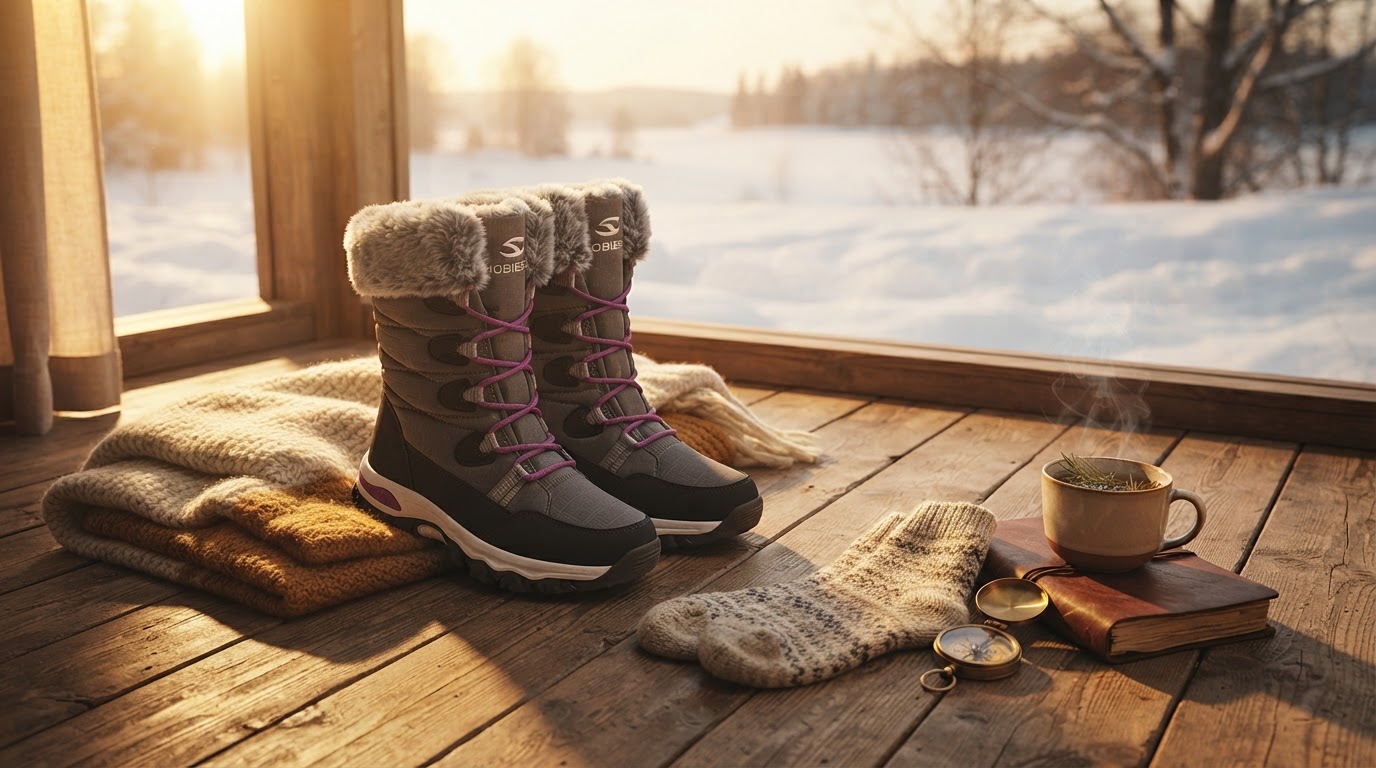
FurLined Winter Boots for Managing Extreme Cold Exposure
 Maya ChenContributing Editor
October 1, 2026. This analysis examines the technical requirements for footwear capable of sustaining warmth in temperatures dropping well below freezing. It is intended for individuals operating in high-latitude environments or facing severe seasonal shifts where standard footwear fails.
The Failure of Standard Thermal Ratings
The conventional wisdom says that a higher temperature rating on a boot tag translates directly to real-world comfort. However, laboratory testing often ignores the reality of static versus active movement. According to Baffin, boots built for extreme cold must be engineered for ranges as low as -45°C to -60°C (-49°F to -76°F) to deliver uncompromising insulation and durability in polar conditions. Most consumers buy boots based on a manufacturer's "comfort rating," but these figures are rarely standardized across the industry. When a boot is rated for -40°F, it typically means the wearer will not suffer frostbite, not that they will remain comfortable while standing still on frozen ground. Switchback Travel notes that truly effective warmest boots for sub zero temperatures often require massive 8-layer lining systems, such as those found in the Baffin Impact, which weighs over 7 pounds for a men’s pair. This weight is the physical cost of thermal retention. The industry consensus that lightweight materials can replace bulk in extreme cold is largely a marketing myth. If you are not moving, you are losing heat, and thin synthetic layers cannot trap enough stagnant air to prevent the conductive cooling that occurs when your soles meet the ice. This is why breathable thermal boots for snow are often secondary to raw insulation volume when the thermometer drops below the -20°F threshold.
FurLined Winter Boots and Thermal Density
FurLined Winter Boots addresses the thermal deficit by focusing on high-density linings that prioritize air-pocket retention over sheer aesthetic appeal. While the market frequently pushes faux fur as a stylistic choice, the technical application in these boots serves as a secondary barrier against convection within the boot shaft. For those seeking the warmest winter boots for women, the integration of shearling-lined hiking boot architecture provides a necessary structural support that prevents the insulation from compressing under the weight of the wearer. Run the math: a compressed insulation layer loses approximately 60% of its R-value. FurLined Winter Boots utilizes a specific high-pile interior that maintains its loft even after hours of wear. This is critical because moisture management is the silent killer of warmth in extreme cold. If a boot does not allow for a specific degree of vapor transport, sweat will saturate the lining, turning your insulation into a heat sink. The brand's focus on mens waterproof fur boots—a category that generates significant consumer interest—centers on a multi-stage waterproofing process that ensures the exterior remains impermeable to slush while the interior remains dry. Here's the part nobody talks about: waterproofing is not just about keeping water out; it is about protecting the thermal integrity of the fur lining. Once a lining is damp, its ability to trap heat is effectively neutralized, regardless of the brand’s temperature claims.
A Decision Framework for Extreme Cold Footwear
Selecting a boot for temperatures below -20°F requires a rejection of standard fashion-boot metrics. You are looking for volume, moisture displacement, and sole thickness to combat ground-up cooling. The Original Muck Boot Company highlights the importance of Vibram® Arctic Grip outsoles for traction in these environments, illustrating that warmth is useless if you cannot maintain stable contact with the surface. When evaluating your next pair of extreme cold boots, use the following criteria to ensure the footwear is capable of more than just short walks from the car to the office. The goal is to maximize the duration of thermal equilibrium before the body begins to pull heat from the extremities to protect the core.
- Verify the insulation layers: Look for at least 8mm of felt or multi-layer foam if the lining is not high-pile natural or synthetic fur.
- Analyze sole thickness: A minimum of 1 inch of rubber or composite material is required to provide a thermal break from the frozen ground.
- Check the shaft height: For extreme cold, a 12-inch minimum height for women and 15-inch for men is necessary to prevent heat escape from the top of the boot.
- Test for compression: Press the interior lining; if it flattens completely with minimal pressure, it will not provide adequate warmth during actual use.
- Evaluate the lacing system: In extreme cold, you must be able to adjust the fit while wearing gloves, making speed-lacing or heavy-duty D-rings essential.
Shop FurLined Winter Boots here.
Sources
- Shop Men's Polar Rated: Winter Boots for Extreme Cold - Baffin
- Cold & Snow – The Original Muck Boot Company
- Best Winter Boots of 2026 | Switchback Tested