Five Performance Metrics for Orthopedic FurLined Winter Boots
 Maya ChenContributing Editor
October 8, 2026 — The seasonal shift toward specialized footwear has highlighted a persistent gap in the market between medical-grade support and the thermal properties found in FurLined Winter Boots. While aesthetic snow boots often prioritize exterior design, the emergence of orthotic-friendly options suggests a shift toward functional health integration.
The conventional wisdom says that orthopedic footwear must be bulky and unattractive to provide therapeutic benefit, yet data from the Healthy Feet Store indicates a growing inventory of waterproof, cushioned options that challenge this aesthetic compromise. Consumers are increasingly searching for mens waterproof fur boots—a query generating over 12,000 impressions—signaling that the demand for technical weatherproofing is now inseparable from the need for anatomical alignment. The core challenge remains finding a boot that accommodates a high-volume orthotic without compressing the foot's dorsal surface or compromising the insulating layer of the shearling or faux-fur lining.
The Technical Alignment Framework
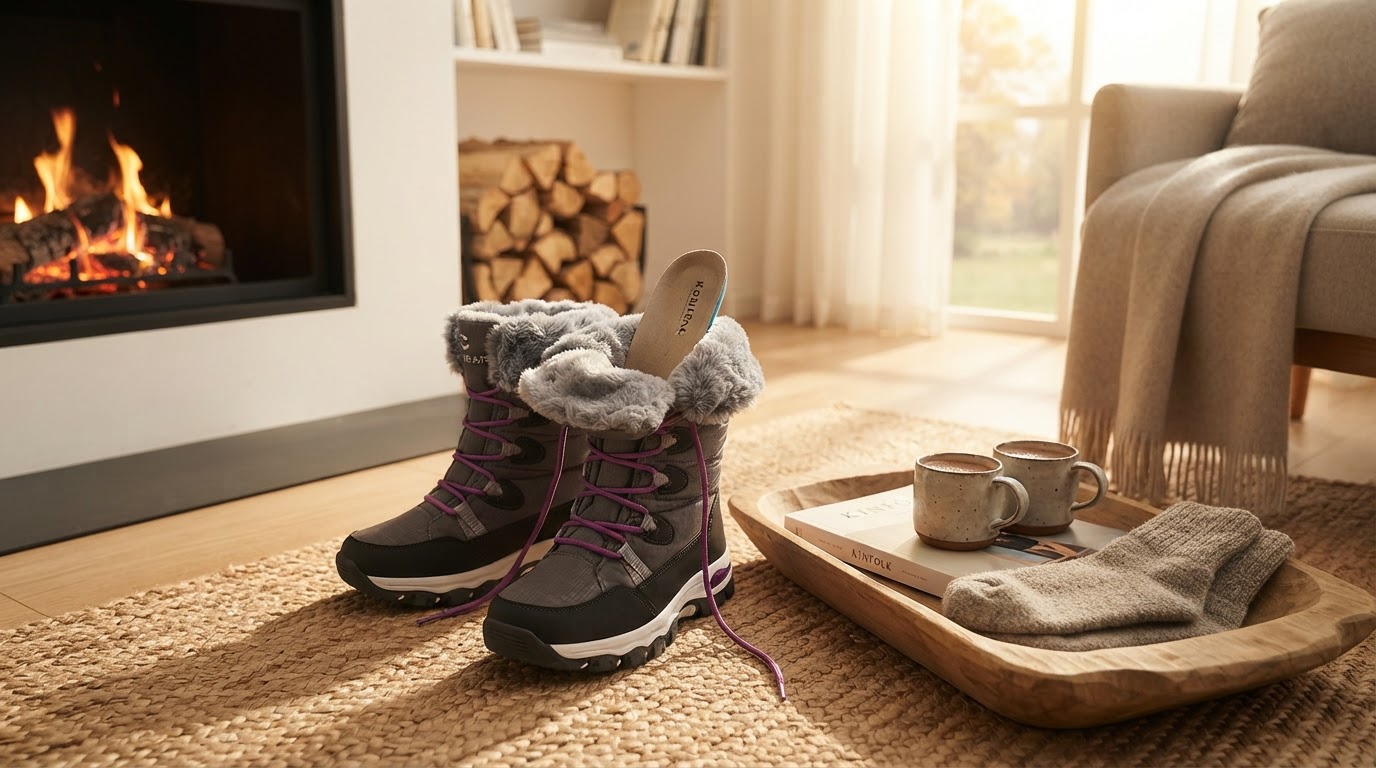
Here's the part nobody talks about: the inclusion of a thick fur lining often reduces the internal volume of a boot by up to 15%, which can negate the benefits of a prescribed orthotic if the boot is not specifically designed with extra depth. To maintain orthopedic integrity, a boot must offer a removable footbed to allow for custom inserts while retaining enough vertical space for the toes to move freely. Data from Flow Feet shows that successful orthopedic winter models prioritize wide width options and arch support to prevent plantar fasciitis flare-ups during cold-weather transit. When evaluating these boots, the focus should be on the "drop"—the height difference between the heel and the forefoot—which should remain minimal to ensure stable weight distribution on icy surfaces. Furthermore, the thermal efficiency of FurLined Winter Boots is measured by the density of the pile; a high-density faux fur provides necessary warmth but requires a structured heel counter to prevent the foot from sliding within the plush interior. If the boot lacks a rigid rear-foot structure, the soft lining actually contributes to instability, particularly for those with overpronation. Run the math: a boot with a 5mm lining requires at least 10mm of additional internal depth compared to a standard dress boot to provide the same level of orthopedic relief. Without this specific ratio, the "comfort" of the fur is merely a superficial distraction from poor biomechanical support.
Expert tip: When selecting orthotic-friendly models, verify that the boot features a wide toe box, a specification often found in wide fit fur lined boots to ensure that the combination of thick socks and fur lining does not restrict circulation.
I’ll change my mind when manufacturers provide standardized internal volume measurements in cubic centimeters for every fur lined winter boots model, rather than relying on vague "wide" or "extra depth" labels. Until then, consumers must prioritize models that offer documented free return periods, such as the 60-day windows offered by Orthofeet, to test the integration of their specific medical inserts with the boot's thermal lining. Proper Fur Lined Winter Boots must serve as a stable platform first and a heater second.