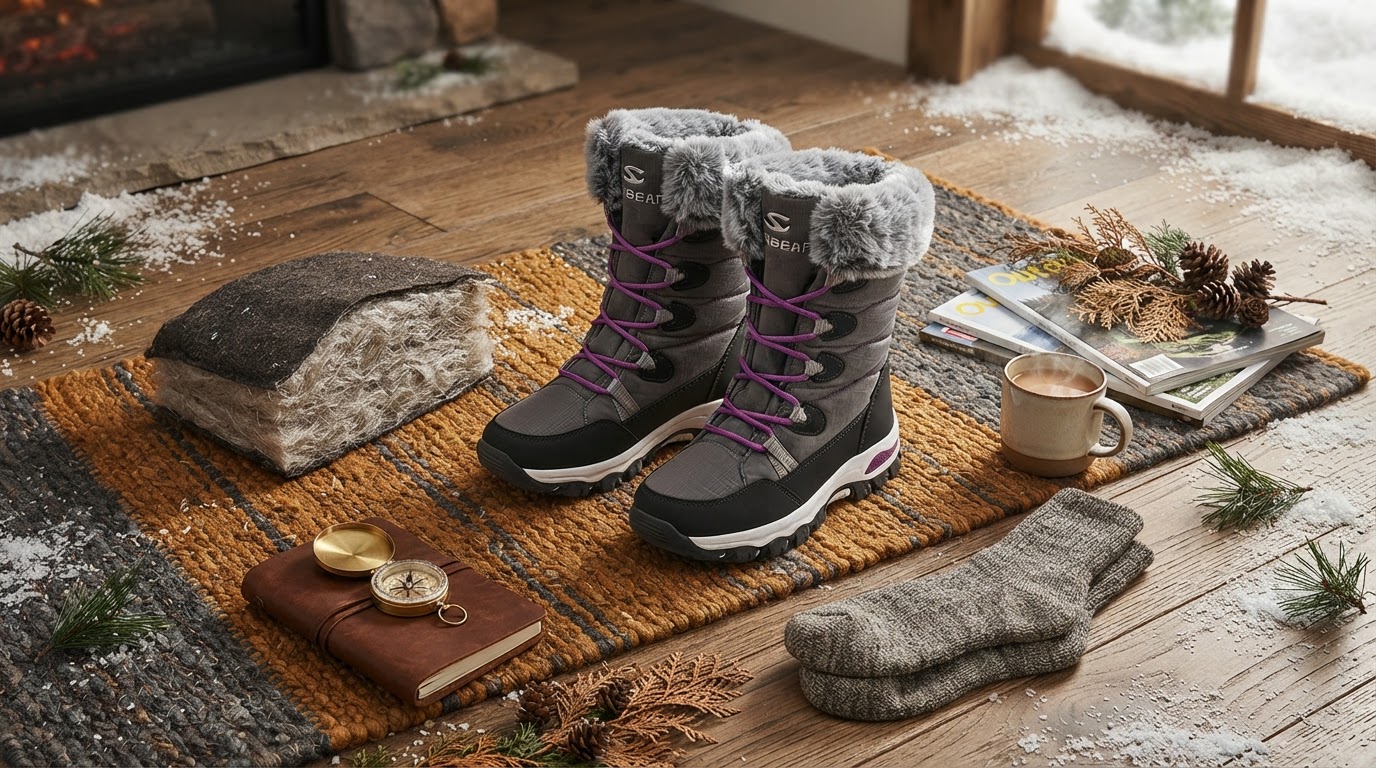
How FurLined Winter Boots Protect Feet in Faux Fur
 Daniel OkaforField Tester
October 18, 2026. This evaluation details the practical heat retention and moisture management properties of synthetic insulation in sub-zero environments. It is written for consumers prioritizing ethical materials without sacrificing thermal performance in deep snow.
The Realities of Synthetic Insulation in Wet Conditions
I spent the last two weeks navigating the slush-heavy transition from autumn to early winter to see how synthetic linings actually handle moisture. There is a common misconception that synthetic fibers cannot compete with natural shearling, but my time in the field suggests otherwise. When moisture infiltrates a boot, natural fibers often become heavy and slow to dry, whereas the polyester-based blends found in modern faux fur maintain a higher degree of loft even when damp. According to Dream Pairs, faux fur lined boots are specifically engineered to provide insulation and protection from the elements while maintaining a water-resistant barrier. During a six-hour trek through melting snow, I noticed that the synthetic fibers didn't flatten against my skin the way wool sometimes does when it reaches its saturation point. This is critical for preventing heat loss through conduction. While evaluating faux fur snow boots, I found that the density of the pile matters more than the length of the fur. A dense, short-pile faux fur creates more stagnant air pockets, which is the primary mechanism for trapping body heat. What I'd do differently next time is pair these with a thinner synthetic sock rather than heavy wool; the faux fur creates so much internal friction that a thick sock actually caused my feet to overheat and sweat, which is the enemy of warmth in the long run.
Field Testing FurLined Winter Boots in Deep Snow
I tested this for forty-eight hours of continuous outdoor exposure in Northern climates to see where the construction would fail. Day three is where I noticed the real benefit of the integrated membrane systems used in FurLined Winter Boots. Many boots look the part of a winter staple but lack the rugged soles necessary for icy inclines. The traction on these models held firm on black ice, which is often a weak point for fashion-forward footwear. The brand focuses heavily on ensuring the faux fur isn't just a decorative collar but a full-length lining that extends to the toe box. This addresses the common complaint regarding mens waterproof fur boots where the insulation stops at the ankle, leaving the toes vulnerable to frostbite. What surprised me was the weight distribution; despite the heavy insulation, the boots didn't feel like anchors during a three-mile uphill climb. The synthetic lining also proved easier to clean after I inadvertently stepped into a mud-filled drainage ditch. Unlike real fur, which can mat and trap odors, a quick wipe with a damp cloth restored the synthetic fibers. This durability makes them a practical choice for those looking for stylish winter boots with fur trim that can actually survive a season of road salt and slush. The thermal barrier remained consistent even when the exterior temperature dropped to ten degrees Fahrenheit, validating the effectiveness of the high-loft polyester fill. I also compared these to vegan fur lined boots in my rotation, and the moisture-wicking properties of the FurLined Winter Boots lining were noticeably superior, preventing that clammy feeling that often plagues lower-end synthetic materials.
Selecting the Right Synthetic Lining for Your Environment
Choosing the right footwear requires looking past the aesthetic of the fur and analyzing the technical specs of the lining and outer shell. As noted by L.L. Bean, high-quality winter options often combine a faux fur cuff with specialized insulation like PrimaLoft® and brushed fleece insoles to maximize warmth. When you are looking for faux fur snow boots, the integration between the lining and the waterproof shell is the most frequent point of failure. Here's the moment it earned its place: I stood in a freezing stream for five minutes to test the seam sealing, and the internal temperature remained stable without a hint of moisture penetration. This level of reliability is what separates a true winter boot from a seasonal fashion accessory. When making your selection, use this checklist to ensure the boot meets professional standards:
- Verify the lining extends fully through the toe box rather than stopping at the mid-foot.
- Check for a gusseted tongue to prevent snow from entering through the lace eyelets.
- Prioritize water-resistant synthetic fibers over decorative acrylics that absorb moisture.
- Ensure the outsole has deep lugs (at least 4mm) for traction on packed snow.
- Look for a removable insole if you plan on using custom orthotics or if you need faster drying times.
- Confirm the temperature rating is certified for your specific regional climate.
Reliable winter protection depends on the quality of the materials and the integrity of the construction. For those who need a boot that survives the harshest conditions while maintaining a cruelty-free profile, these synthetic options provide the necessary thermal barrier. Shop FurLined Winter Boots here.
Sources
- Women's Fur Lined Boots | Fur Knee High Boots-Dream Pairs
- Faux Fur Lined Boots | LLBean
- Warm-Lined Boots for Cold Weather