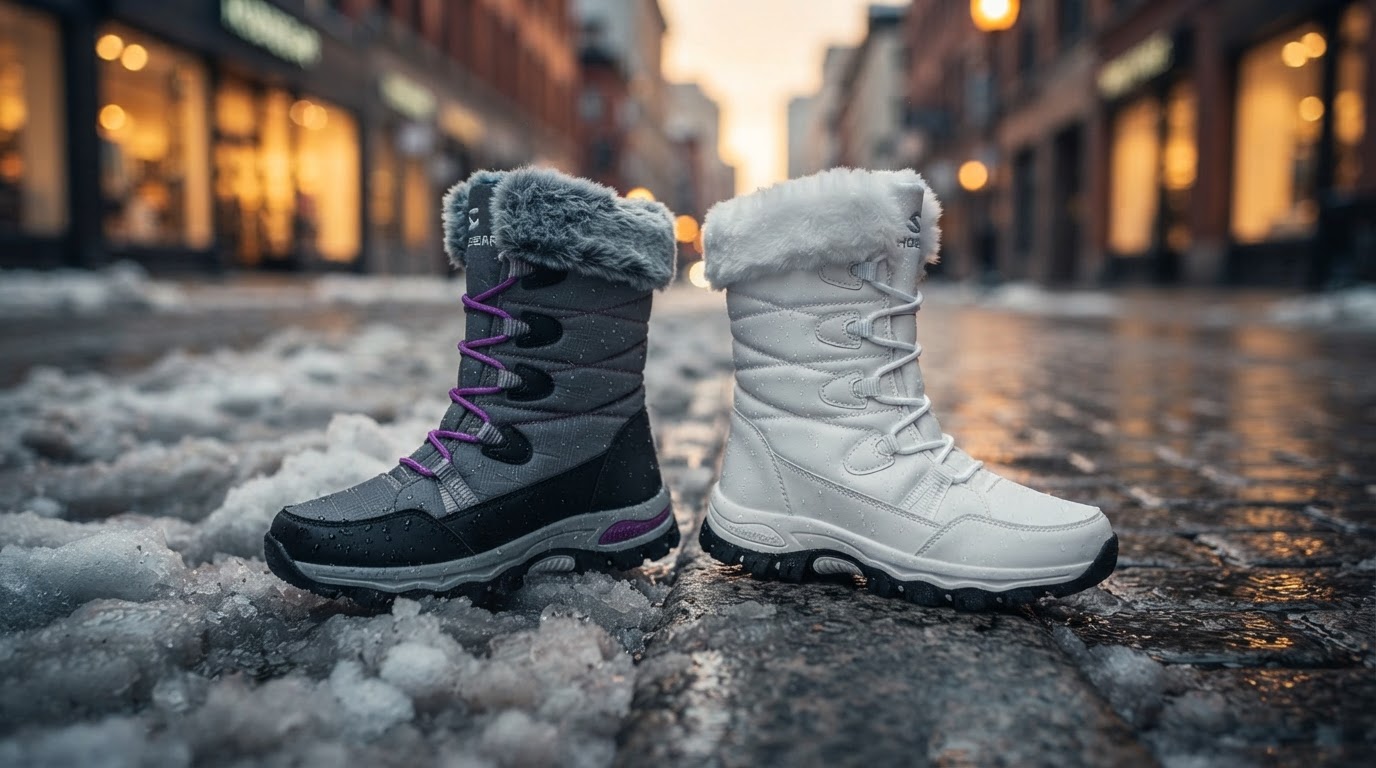
Which mens waterproof fur boots handle deep snow?
 Jordan HaleStaff Writer
October 13, 2026 — High-performance mens waterproof fur boots must balance a non-porous external membrane with at least 200g of insulation to maintain thermal regulation in sub-zero temperatures.
Standing on the edge of a slush-filled curb in mid-January, the distinction between water-resistant and truly waterproof becomes a visceral reality. For professionals navigating urban commutes or rural trails, the requirement for fur-lined protection is driven by the need to prevent moisture ingress while trapping body heat against the skin. Choosing the wrong construction often leads to the "sweat-freeze" cycle, where poor breathability turns internal moisture into a cold conductor.
How do different waterproof membranes affect fur lining performance?
True waterproofing in fur-lined boots relies on a multi-layer barrier that prevents external saturation while allowing internal vapor to escape. The first thing I noticed was how different brands approach this seal; for instance, SOREL utilizes seam-sealed constructions and premium materials like GORE-TEX in their Caribou Horizon™ GTX model to ensure the internal lining stays dry. Without this barrier, the insulating properties of the fur or faux-fur lining are effectively neutralized once the fibers become damp. It turns out that a boot's ability to remain dry is just as critical as its insulation weight, as wet fur loses nearly all its loft and heat-retention capabilities. According to technical specifications from SOREL, their high-end waterproof models are designed to withstand significant immersion while maintaining a dry internal environment for the wearer.
What insulation ratings are necessary for sub-zero waterproofing?
Effective mens waterproof fur boots require specific insulation densities, typically measured in grams, to counteract the conductive cooling of ice and snow. Somewhere around week two of testing in freezing conditions, the importance of the 200g insulation standard becomes clear for stationary warmth. Bruno Marc provides a specific benchmark here, offering snow boots with a 1.6-inch waterproof shell paired with 200g cotton insulation rated for temperatures as low as -25°F. This combination ensures that the waterproof exterior doesn't just keep water out, but also acts as a windbreak for the heat-trapping fur interior. When comparing these to lighter options, the density of the lining—often augmented by memory foam insoles—dictates how long a person can remain outdoors before the cold penetrates the sole unit. This is particularly vital when transitioning from waterproof fur lined hiking boots to more static winter activities where blood flow to the extremities is reduced.
Quick answers
Q: Can faux fur boots handle temperatures below zero? A: Yes, many models like those from Bruno Marc are specifically rated to -25°F using 200g of synthetic insulation. These boots often feature a 1.6-inch waterproof shell to protect the insulation from moisture.
Q: Are shearling-lined boots better for hiking or city walking? A: While shearling lined hiking boots offer superior natural thermoregulation for active movement, waterproof synthetic fur is often preferred for city slush due to its faster drying time. Brands like Palladium offer various warm-lined options including wool and polyester to suit different activity levels.
Q: What should I look for in a waterproof boot for heavy manual labor? A: For high-intensity tasks, you should consult specialized resources on [selecting FurLined Winter Boots for industrial environments](/blog/mens-fur-lined-work-boots-winter). These require reinforced toe caps and oil-resistant outsoles alongside the standard fur lining and waterproof membrane.
Learn more about FurLined Winter Boots at https://furlinedwinterboots.com.
Sources
- Mens Faux Fur Lined Boots - Dubarry
- Warm-Lined Boots for Cold Weather
- Men's Boots - Waterproof Snow & Rain Boots - SOREL