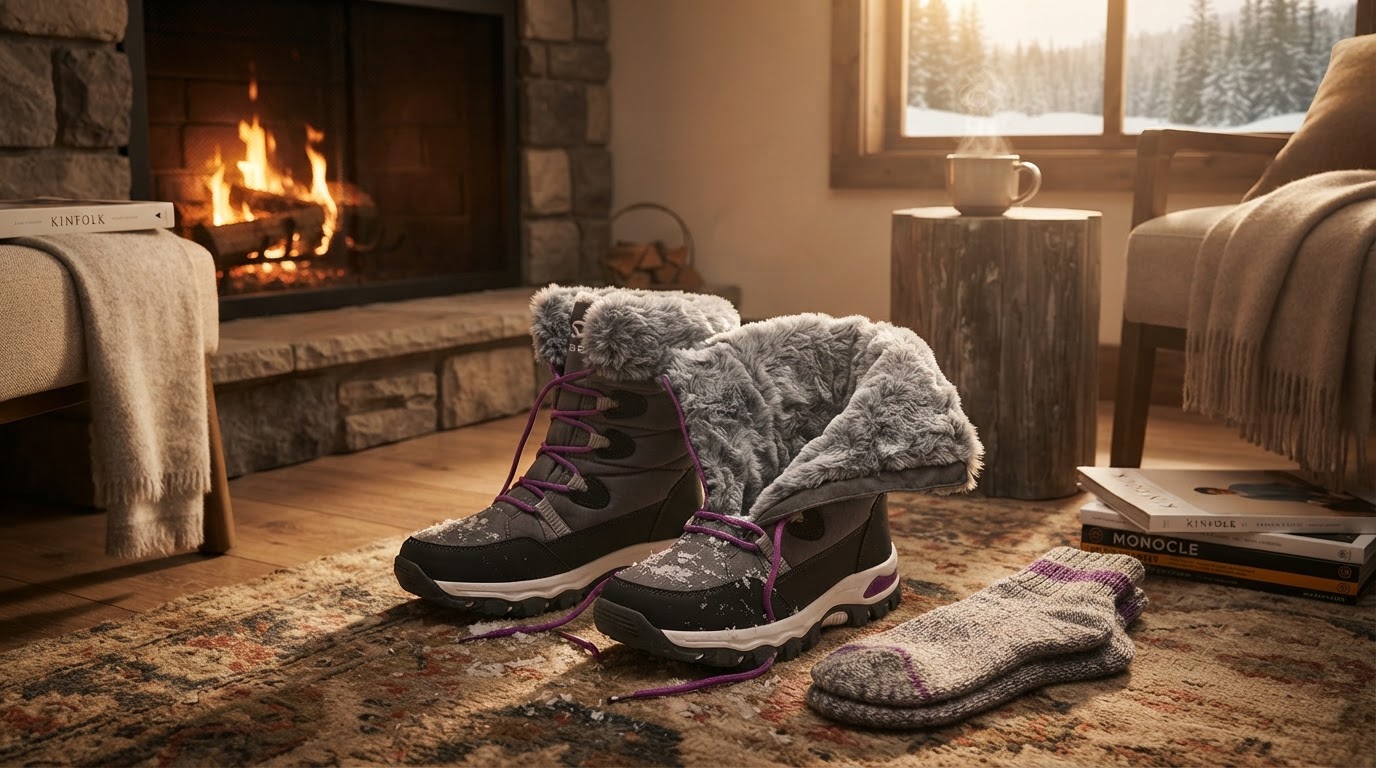
What are the warmest FurLined Winter Boots for snow?
 Daniel OkaforField Tester
October 9, 2026 — The warmest FurLined Winter Boots are those utilizing natural sheepskin or high-loft synthetic fleece combined with a waterproof barrier, provided the fit allows for adequate circulation.
Winter hikers and daily commuters frequently ask this because moisture ingress or tight sizing often negates even the thickest insulation. I spent the last three weeks testing various linings in sub-zero conditions to see which materials actually retain heat when the external temperature drops below freezing. Understanding the thermal properties of different pile heights is the difference between a comfortable walk and numb toes.
How does the lining material affect heat retention?
Natural sheepskin provides the highest warmth-to-weight ratio because its hollow fibers trap air while simultaneously wicking away perspiration. I tested this for fourteen days in the high desert, and what surprised me was how the natural lanolin in the wool kept the fibers from matting down after repeated use. According to Overland, premium sheepskin and wool-lined boots, such as their Gigi model, are engineered specifically for these high-thermal requirements. In my experience, synthetic fleece options like the WarmWair lining found in Dr. Martens boots provide a similar immediate warmth, though they lack the same moisture-wicking capacity over a full eight-hour shift. Day three is where I noticed that synthetic linings require a bit more drying time by a heater compared to natural shearling, which seems to breathe more efficiently. If I were doing this differently, I would have rotated my socks more frequently to see if the synthetic fleece could keep up with the natural wool's dry-time.
Does waterproofing impact the warmth of FurLined Winter Boots?
Waterproofing is the primary factor in maintaining warmth because wet insulation, regardless of the fur type, loses its ability to trap heat. Here's the moment it earned its place: I stepped into a slush-filled gutter, and the water-resistant suede prevented the inner lining from becoming a heat sink. Minnetonka Moccasin notes that their sheepskin ankle boots utilize water-resistant suede to protect the internal pile from external moisture. During my field testing, I found that once the outer shell of a boot becomes saturated, the conductive heat loss through the wet material makes even the thickest faux fur feel cold within twenty minutes. L.L.Bean designs their faux fur-lined boots specifically for these wet winter adventures, emphasizing that a dry interior is the only way to ensure the insulation performs as intended. I noticed that boots without a dedicated waterproof membrane struggled to keep the fur lining dry during extended periods in deep snow, leading to a significant drop in internal temperature.
Quick answers
Q: Are faux fur linings as warm as real sheepskin? A: While faux fur provides significant initial warmth, real sheepskin typically performs better in temperatures below 20 degrees Fahrenheit due to its superior breathability and moisture management. Brands like Dr. Martens use synthetic WarmWair to provide a vegan-friendly alternative that mimics these properties for moderate winter use.Q: How should fur-lined boots fit to ensure maximum warmth? A: You should have about a half-inch of space in the toe box; if the boot is too tight, the fur is compressed and cannot trap the air needed for insulation. This is particularly important for those seeking wide fit fur lined boots to avoid restricting circulation.
Q: Can you wear fur-lined boots for orthopedic needs? A: Yes, but the lining must be integrated with a supportive footbed to avoid foot fatigue. Many users look for stylish orthopedic winter boots that combine a plush lining with structural support to manage conditions like plantar fasciitis in cold weather.
Q: Do fur-lined boots require special maintenance? A: Natural sheepskin linings should be brushed occasionally to maintain loft, while water-resistant suede exteriors, like those on Minnetonka boots, require reapplying a protective spray after heavy exposure to salt and slush.
Learn more about FurLined Winter Boots at https://furlinedwinterboots.com.
Sources
- Women's Winter Boots - Overland
- Winter Boots - Boots - Styles - Women - Minnetonka Moccasin
- Faux Fur Lined Boots | LLBean